
INTEGRATIVE CAPOEIRA FOR HEALTH PROMOTION AND DISEASE PREVENTION AND REHABILITATION
DOI:
https://doi.org/10.5281/zenodo.21814967Keywords:
capoeira; health, Integrative and Complementary Health Practices (PICS).Abstract
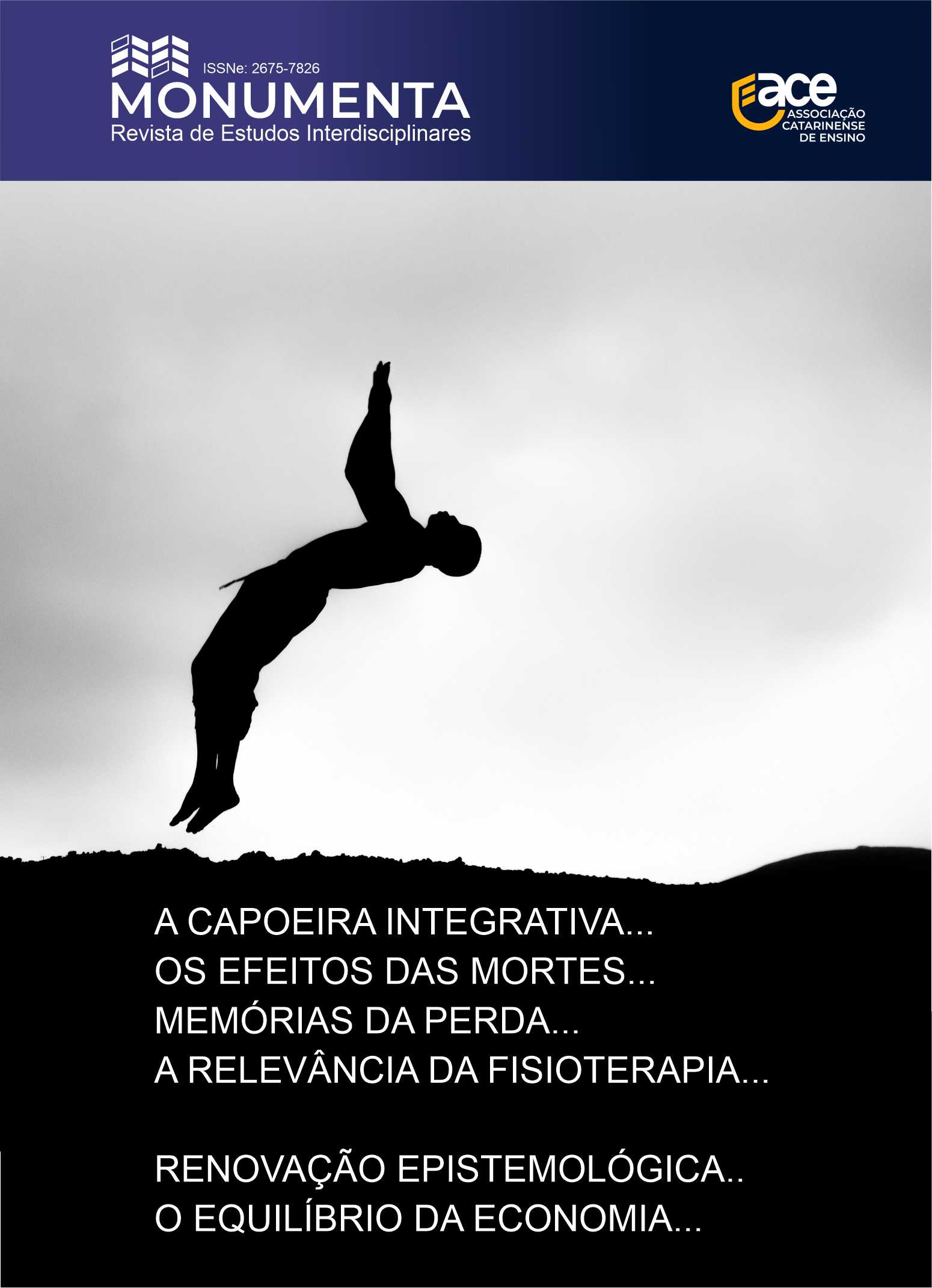
Capoeira, a fight disguised as a dance, created in Brazil by enslaved blacks from Africa as a tool for the liberation of a people, is recognized as a cultural manifestation with multidimensional characteristics. It is an activity that adapts to its practitioner, being transmitted from the Mestra/Mestre to the student, making motor learning more effective, with its fight, dance, play, musicalization, theatricalization, games, sport and culture. Evidence points to the positive impact of Capoeira on health, so the aim of this study was to describe the main evidence regarding health promotion, disease prevention and rehabilitation of health problems, based on the practice of Capoeira. The study was carried out through an integrative review of the literature published between 2010 and 2022, with searches in the SCIELO, BDTD, LUME, CAPES and Google Scholar databases, as well as an intentional search for documents from national bodies related to the topic in the Google operating system. Based on the analysis of the material included in the scope of the study, 3 categories were defined to present and discuss the results: the first category addresses the health benefits of Capoeira; the second focuses on the potential of Capoeira as a strategy for health promotion and disease prevention; and the third and final category is directed to the use of Capoeira in the treatment and control of health problems. The study found evidence of Capoeira as an expressive body practice that has elements related to health promotion, prevention and recovery, allowing the proposal of recognizing and including Capoeira as a therapeutic modality in the context of Integrative and Complementary Health Practices (PICS).
Downloads
Published
How to Cite
Issue
Section
License
Copyright (c) 2026 Monumenta - Journal of Interdisciplinary Studies

This work is licensed under a Creative Commons Attribution-NonCommercial-ShareAlike 4.0 International License.